How much does a concrete patio cost in Boulder?
Pouring against the foothills costs more than the national flatwork average for honest reasons: an air-entrained mix for the freeze-thaw, footings carried below the frost line, and extra base work over expansive clay. As a starting range, most broom-finish patios in Boulder land around $10 to $16 per square foot, with stamped or decorative work nearer $16 to $26, before base prep. From there the figure follows square footage, the finish you choose, and how much the clay makes us do underneath. We price it after walking the yard, never a number over the phone we can't stand behind.
How thick should a patio slab be?
A residential patio pours on a four-inch base, which is plenty under a table, chairs, and everyday use, and we deepen it wherever real weight is going to land, a hot tub being the usual reason.
Will Boulder's clay soil crack my patio?
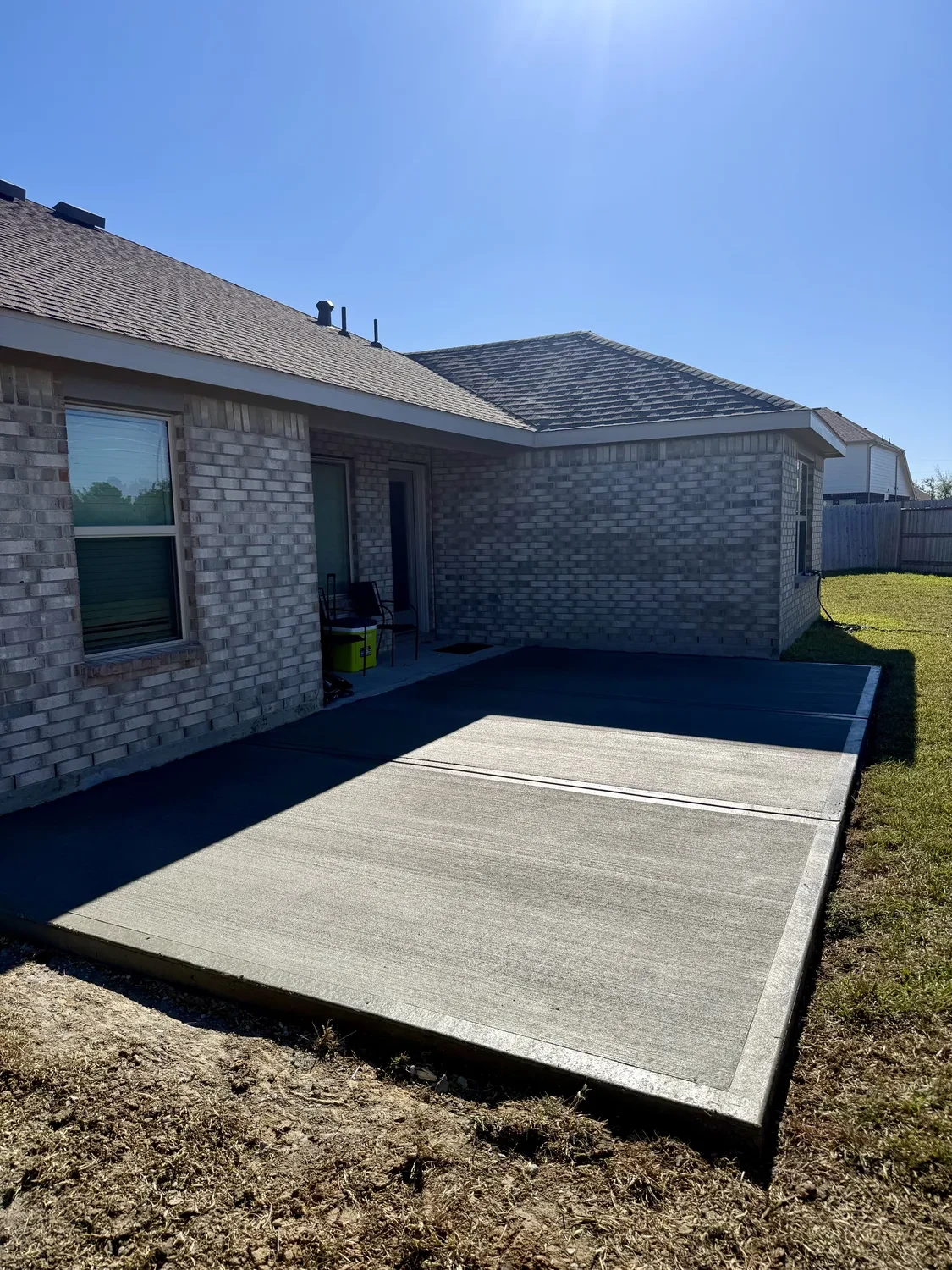
Expansive clay is the first thing to suspect when a slab lifts on the Front Range: it swells wet and shrinks dry, so we handle it underneath, digging and compacting a draining base, then sawing control joints so any movement lands on a line we picked. Nobody can swear concrete never shifts at this altitude; we build so that when it does, it gives where we planned.
Can you pour a patio in the winter here?
Concrete has to cure above freezing, so a deep-winter Boulder pour is limited and wants frost protection. We give you a straight read on whether to pour now or hold for the season, rather than lay a slab in conditions that would compromise it.
Stamped or broom finish for a Boulder yard?
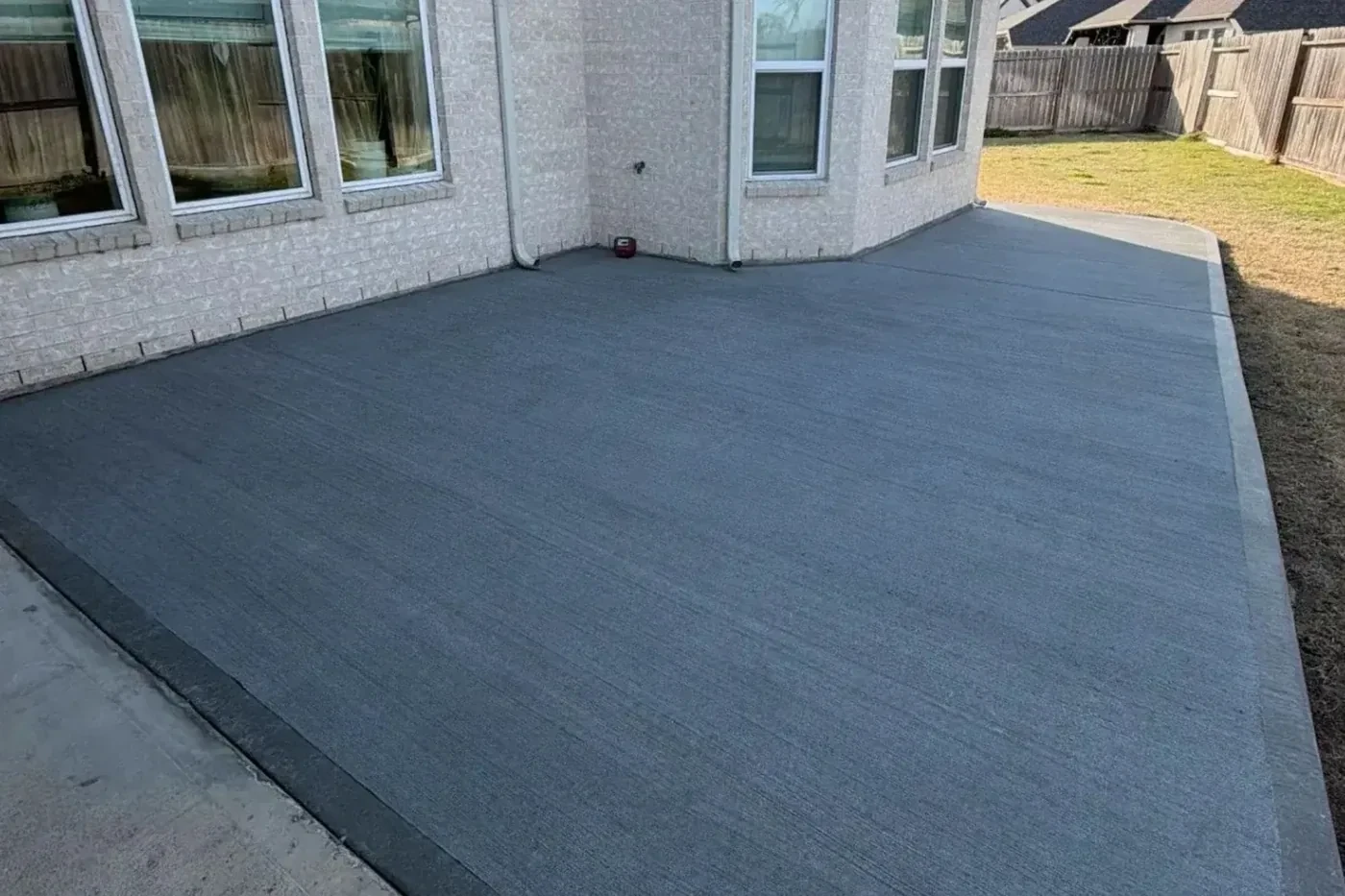
Broom is the practical pick: textured, sure underfoot when there's snow or ice, and easier on the budget. Stamped brings a stone or slate look, but our thin-air UV and winter mag-chloride are hard on the finish, so it asks for resealing sooner. We set the two side by side against how the yard will really get used.
Will a concrete patio drain in our snowmelt?
Yes. We set the pitch so snowmelt and storm runoff shed away from the house instead of gathering at the slab and freezing overnight, which is exactly what chews up edges and joints through a Boulder winter.